Selecting an interior color palette involves more than matching swatches; it requires understanding how natural light interacts with surface texture and organic pigmentation throughout the day.
The Grounding Depth of American Walnut
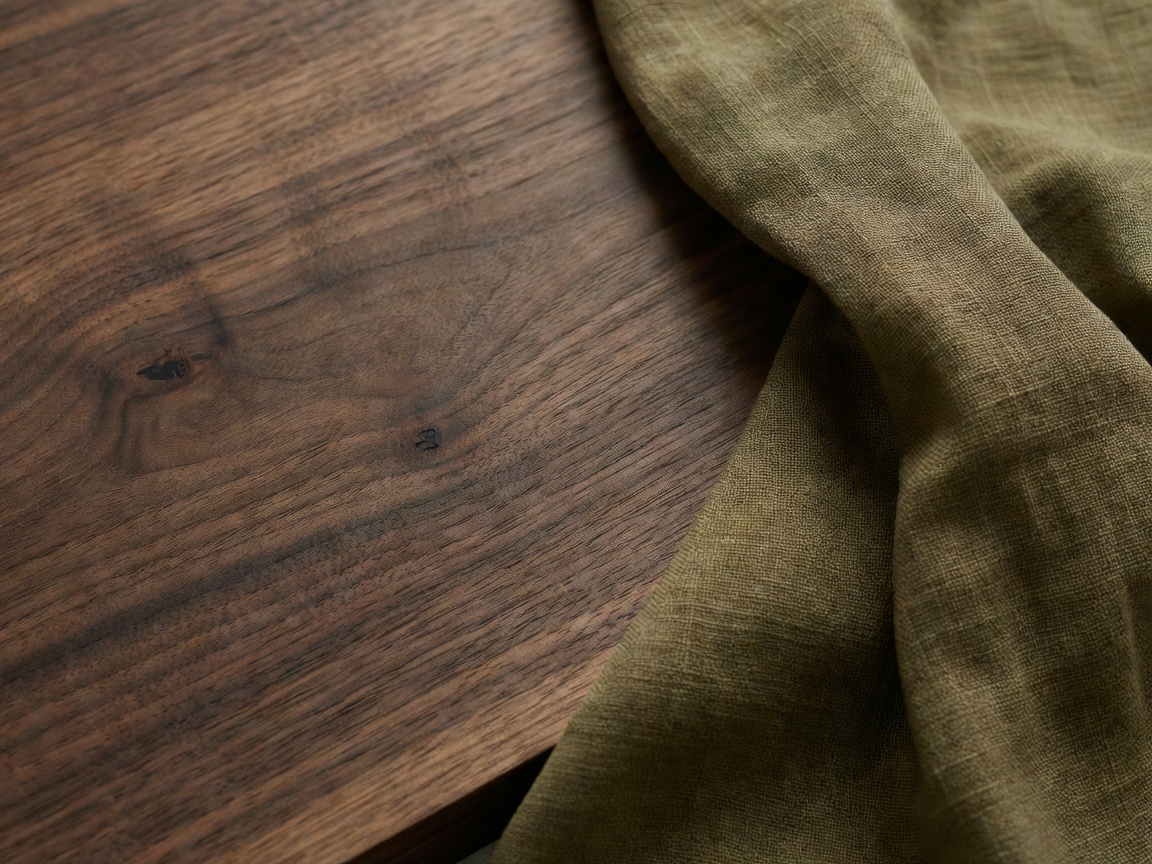
American Black Walnut (Juglans nigra) is prized for its rich cocoa undertones, flowing grain patterns, and structural durability. Unlike stark black painted finishes, walnut brings warmth and organic variety. Used in built-in cabinetry, slatted ceiling features, and dining furniture, it provides visual gravity.
The Botanical Solace of Olive
Olive green serves as a neutral bridge between external nature and indoor sanctuaries. Containing yellow, grey, and umber undertones, olive echoes natural foliage and stone moss. When rendered in mohair velvets, washed linens, or muted matte ceramics, olive softens the heavy architectural lines of dark woodwork.
Warm White Lime Plaster as the Canvas
To prevent walnut and olive from feeling overly dense, a warm white or chalky alabaster plaster wall finish acts as the reflective medium. Lime wash creates a soft, hand-troweled texture that catches indirect light, bathing the room in a serene, gallery-like aura.